


NEOHORI

Neohori is a traditional mountain village overlooking Vliho Bay and Nidri on the island of Lefkada. The first settlers were people from nearby Paleohori, who sought a safer more secluded location away from pirate raids that threatened the coast. For generations, Neohori was a predominantly agricultural community. During the 1970s, most residents left the village and moved closer to the sea in search of more economic opportunities. In the 1990s, the old stone houses became home to a new generation. Drawn by the peaceful surroundings, natural beauty, and slower pace of life, they renovated the traditional buildings while preserving the village’s unique character. Today, Neohori remains a place where history, nature, and community come together. Its stone-built houses, narrow roads, and terracotta roofs are a reminder of its rich past and contribute to its distinctive identity.

ASSOCIATION

The Name

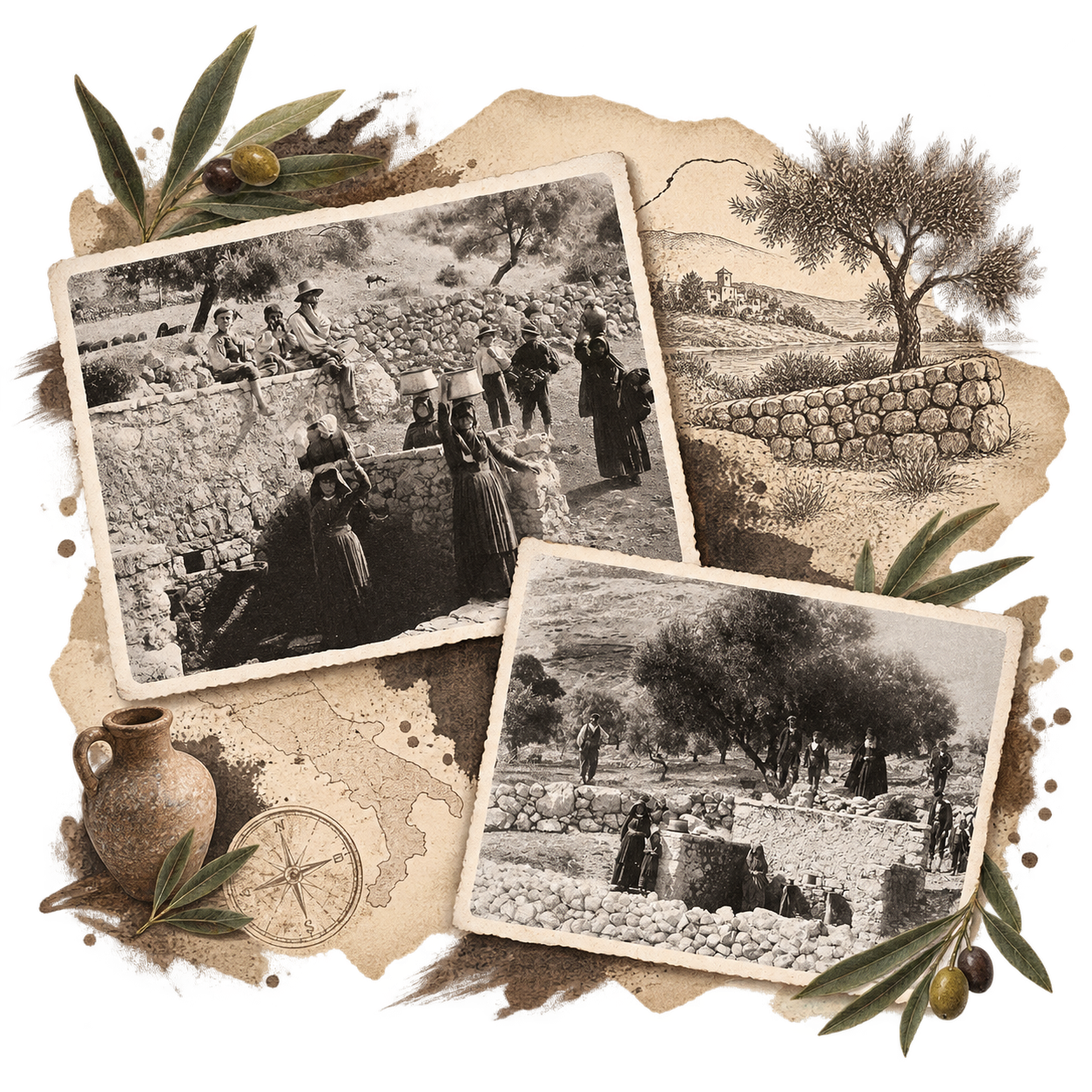
The name of the association – Melanydros – comes from the name of the village fountain – named in recent times Mavroneri. Both gypsum and limestone are found in the area surrounding the spring. In addition, dark mineral coatings, particularly manganese-rich deposits, are present in places, giving the rocks a dark to black appearance on the surface. This also makes the spring water appear dark. The ancient name MELANYDROS (from the words melan – black and hydros – water) derives from this characteristic appearance. In modern Greek it is known as MAVRONERI (from the words mavro – black and nero – water). The spring is mentioned in the Homeric epics and is one of the oldest named springs in Greece. In 1901, it was rediscovered and archaeologically investigated by the German archaeologist Wilhelm Dörpfeld. The name Mavroneri led him to identify the spring with the Homeric Melanydros Spring. Dörpfeld documented the spring and published a photograph of the fountain in 1927 in his seminal work, *Alt-Ithaka* (Volume II, Plate 28). His research and photographs remain among the most important historical records of this spring.

The name of the association – Melanydros – comes from the name of the village fountain – named in recent times Mavroneri.

Both gypsum and limestone are found in the area surrounding the spring. In addition, dark mineral coatings, particularly manganese-rich deposits, are present in places, giving the rocks a dark to black appearance on the surface. This also makes the spring water appear dark.

The ancient name MELANYDROS (from the words melan – black and hydros – water) derives from this characteristic appearance. In modern Greek it is known as MAVRONERI (from the words mavro – black and nero – water).

The spring is mentioned in the Homeric epics and is one of the oldest named springs in Greece.

In 1901, it was rediscovered and archaeologically investigated by the German archaeologist Wilhelm Dörpfeld. The name Mavroneri led him to identify the spring with the Homeric Melanydros Spring. Dörpfeld documented the spring and published a photograph of the fountain in 1927 in his seminal work, *Alt-Ithaka* (Volume II, Plate 28).

His research and photographs remain among the most important historical records of this spring.

Melanydros – Logo des Kulturvereins von Neochori auf Lefkada
About
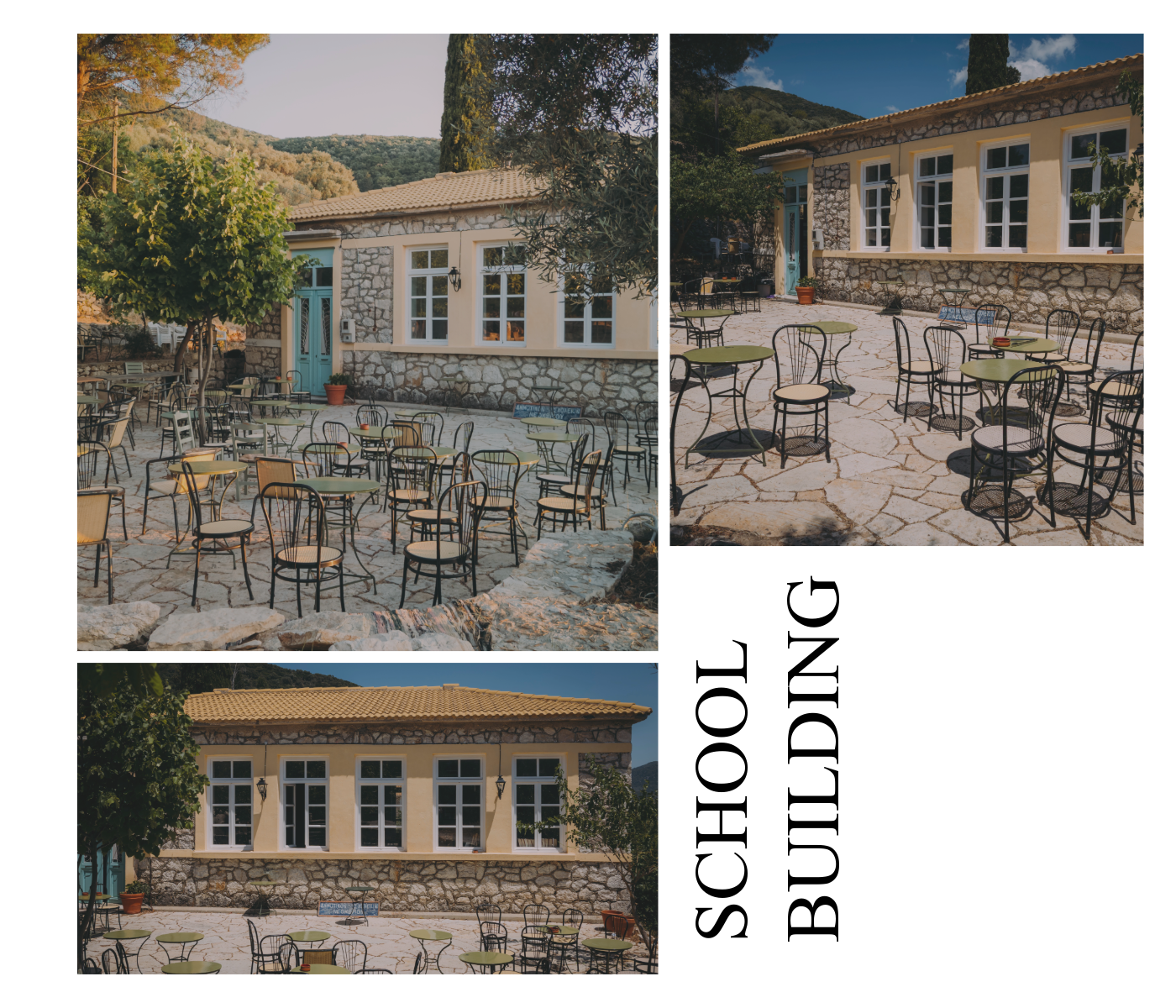
The old village school closed during the 1970s and remained abandoned for many years. The building was later generously granted to the association by the Municipality of Lefkada, giving it a new purpose as a community and cultural centre. Over the past ten years, with the dedication of volunteers, members, and generous supporters, the building has been carefully restored. A new roof was constructed, the windows were replaced, and the square in front of the school was transformed into a welcoming public gathering space. Today, the former school serves as the heart of the association. It hosts concerts, exhibitions, workshops, community meetings and festivals bringing new life to one of the village's most important historic buildings.
Alphabetic List

Association Board

Treasurer

Aggeliki Athanasopoulou

Aggeliki moved from Patras to Lefkada about two years ago and has since become an essential part of the team. As our logistics manager, she takes care of all costs and expenses. In her free time, she creates natural beauty products, including biological creams, mosquito sprays, and ointments.

Vice Chairman

Alexandros Papoutsakis

typing ...

Auditor

Dimitris Gazis

Dimitris was once a student at the school in Neohori, which today serves as the cultural center of Melanydros. As a captain, he has sailed across all seven seas, yet he knows the village, the region — and just about everyone in it — like no other. He is the living link between the past and the present. His hobbies revolve around the sea and everything that comes with it, from fishing to boating.

Auditor

Kostas Gazis

Kostas was also a student at the school in Neohori and lives in his birth village, where he has inherited his family home and stays whenever he is here. After working for many years in Athens, he is now the quiet strength of the association. He played a major role in the rebuilding of the old school, now the cultural center of Melanydros. Kostas supports us with logistics and is very precise when it comes to numbers, rights, and regulations.

Member

Linda Mills

typing ...

Member

Spiros Gazis

Spiros is a captain who works without hesitation and puts things into action immediately. His practical and focused approach makes him a reliable part of the team.

Chairman

Maria Mitsou

Maria is responsible for public relations and organizes events together with the team. After living in Germany for 17 years, she returned to Greece and has been living permanently in Neohori for the past seven years. As the chairperson of the association, she represents Melanydros with strength and clarity. Her warm and open nature, combined with a positive attitude, makes her a strong leader and a connecting force within the community.

Secretary

Maria Vlassopoulou

typing ...

Auditor

Ourania Pavlou

typing ...

Member

Rowan Smith

typing ...

Safe havens for support

Children in poverty are more likely to be exposed to the stress of violence, gangs and drugs. This can negatively affect brain development and long-term well-being. Your support during this vulnerable time helps children and youth set their own goals to build a life free from poverty.

Good that grows

When you sponsor a child, you create a powerful multiplier effect. You help them see beyond the daily struggles of life in poverty. Your support releases them from a cycle of short-term decisions and helps them gain the ability to begin contributing to their own families and communities.

Customized programs

Sponsorship encompasses key programs specifically designed to address a child’s toughest issues in their fight against poverty. Getting and staying healthy, staying in school, finding a stable job. You can help a child overcome challenges they’d otherwise face for a lifetime.
Testimonial

What Our Client’s Say

It’s through mistakes that you actually can grow you get rid of everything that is not essential to makihave to get bad.